
Treatment for Minor Injuries and When to Seek Care
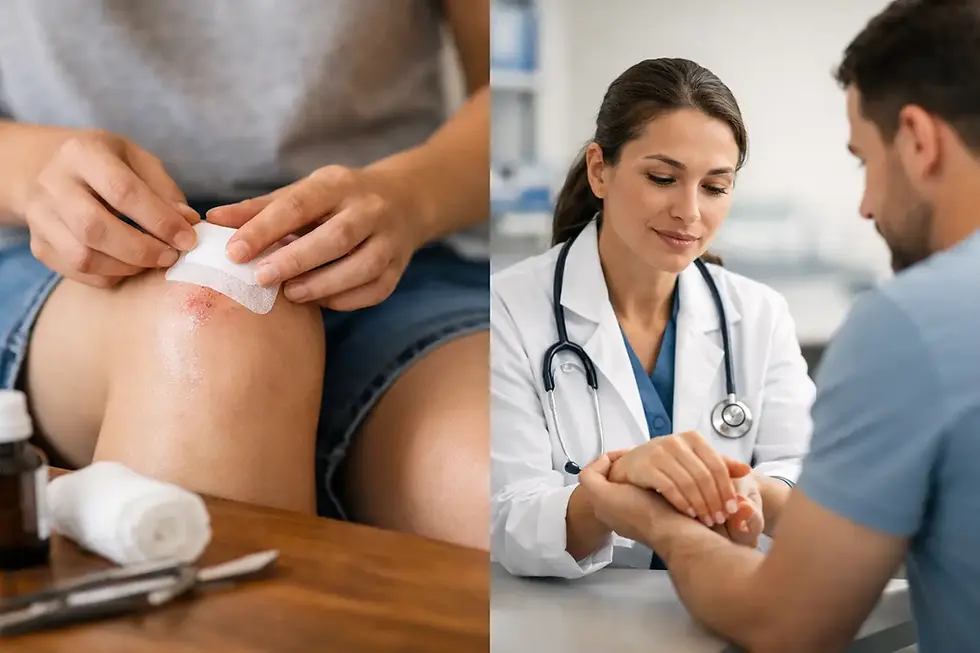
Many scrapes, bruises, mild burns, and sprains can begin with careful home care. Others deserve prompt clinical attention, even if they do not require an emergency room visit. Knowing the difference can save time while making sure you or your family member gets the care needed.
Start With Safety, Then Assess the Injury
Before cleaning a wound or trying to move a sore joint, take a moment to look at the whole situation. If the person has trouble breathing, loses consciousness, has severe bleeding, experiences chest pain, has sudden confusion, or may have a serious head, neck, or back injury, call 911 right away. Those are emergencies, not conditions to manage at home or in a walk-in clinic.
For less serious injuries, consider a few practical questions. Is the pain mild to moderate and improving with rest? Is the person able to use the affected body part at least somewhat? Is bleeding controlled with steady pressure? Does the wound appear shallow and clean? These signs may point to an injury that can start with home care.
Still, appearances can be misleading. A small cut may need stitches, a painful finger may be fractured, and a puncture wound can carry a higher infection risk than a scrape. When you are unsure, an in-person medical evaluation is a sensible next step.
Home Treatment for Minor Injuries
For uncomplicated injuries, prompt first aid matters. Clean hands, basic supplies, and a calm approach usually go a long way.
Cuts, Scrapes, and Small Wounds
Apply firm, direct pressure with clean gauze or a clean cloth to stop bleeding. Once the bleeding has stopped, rinse the area under clean running water. Mild soap can be used around the wound, but harsh cleansers, hydrogen peroxide, and alcohol may irritate healing tissue.
Pat the area dry, apply a thin layer of petroleum jelly or an appropriate antibiotic ointment if recommended for you, and cover it with a clean bandage. Change the dressing daily or whenever it gets wet or dirty. Watch for increasing redness, warmth, swelling, pus, worsening pain, or fever, as these can be signs of infection.
Minor Burns
For a mild burn from heat, hold the area under cool running water for about 20 minutes as soon as possible. Do not use ice, butter, toothpaste, or other home remedies that can damage the skin or trap heat. Cover the burn loosely with a clean, nonstick dressing and protect it from friction.
A burn needs medical attention if it causes significant blistering, looks white or charred, circles a finger or limb, affects the face, hands, feet, genitals, or a major joint, or was caused by chemicals or electricity.
Sprains, Strains, and Bruises
A twisted ankle, sore wrist, or muscle strain often improves with rest and protection from activities that increase pain. During the first day or two, a cold pack wrapped in a cloth may reduce discomfort and swelling. Use it for short periods rather than placing ice directly on skin.
Gentle compression and elevation can also help with some swelling. However, do not wrap an area so tightly that it becomes numb, cold, pale, or tingly. Over-the-counter pain relievers may be appropriate for some people, but follow label directions and ask a clinician or pharmacist if you have kidney disease, ulcers, take blood thinners, are pregnant, or have other health concerns.
When a Walk-In Clinic Can Help
Walk-in medical care is a practical option when an injury is not life-threatening but needs more than a bandage and rest. Timely evaluation can help identify whether a wound needs closure, whether an X-ray may be needed, or whether pain and swelling suggest a more significant injury.
A clinic can be especially helpful for cuts that may need stitches, persistent bleeding, suspected minor fractures, sprains that make it difficult to bear weight, minor burns, splinters or foreign objects in the skin, and animal bites. It can also help with wound checks if healing does not look right.
For patients in Panama City and Bay County, choosing a walk-in clinic for appropriate minor injuries may mean avoiding a long emergency department wait and a higher bill. The trade-off is that emergency departments are equipped for severe trauma and rapidly worsening symptoms. If the injury could threaten life, limb, vision, or long-term function, emergency care is the safer choice.
Signs You Should Not Wait
Some symptoms call for immediate emergency evaluation. Do not delay or drive yourself if you have any of the following:
Bleeding that does not stop after 10 to 15 minutes of firm, continuous pressure
A deep wound with exposed fat, muscle, bone, or a visible foreign object
A limb that looks crooked, pale, cold, numb, or severely swollen
Severe headache, repeated vomiting, confusion, seizure, or loss of consciousness after a head injury
Trouble breathing, chest pain, severe allergic symptoms, or signs of shock such as fainting or clammy skin
A serious eye injury, sudden vision change, or chemical exposure to the eye
Young children, older adults, and people who take blood thinners may need earlier evaluation after a fall, head bump, or bleeding injury. The same is true for people with diabetes, poor circulation, weakened immune systems, or conditions that can slow wound healing.
Tetanus Protection Is Part of Wound Care
Tetanus is uncommon, but it can be serious. Cuts and punctures caused by dirty or rusty objects are often what people think about, but the concern is not the rust itself. Tetanus bacteria can enter through contaminated wounds, especially punctures, crush injuries, bites, and wounds containing dirt or saliva.
A clinician can review your vaccination history and determine whether a tetanus booster is recommended. In general, adults should stay current on tetanus vaccination, and the timing of a booster after an injury depends on the wound and when the last dose was received. If you cannot remember your last tetanus shot, mention that during your visit.
Help the Injury Heal After the First Day
Minor injuries often feel better before they are fully healed. Returning to sports, heavy lifting, or long periods on an injured ankle too soon can turn a short recovery into a longer problem. Let pain be a guide, especially during the first several days.
Keep wounds clean and covered when they may be exposed to dirt or rubbing. For sprains and strains, slowly return to gentle movement as pain and swelling improve. Stiffness can develop when a joint is kept still for too long, but pushing through sharp pain is not a good recovery strategy.
If symptoms are not improving as expected, or if they worsen after initially getting better, schedule an evaluation. Persistent pain, limited motion, numbness, repeated swelling, or signs of infection deserve attention.
A minor injury should not have to become a major disruption. Pronto Medical Care offers compassionate walk-in support for non-life-threatening injuries, so local families can get professional guidance without making care harder than it needs to be. When something does not look or feel right, getting checked early is often the simplest path toward a safer recovery.



Comments